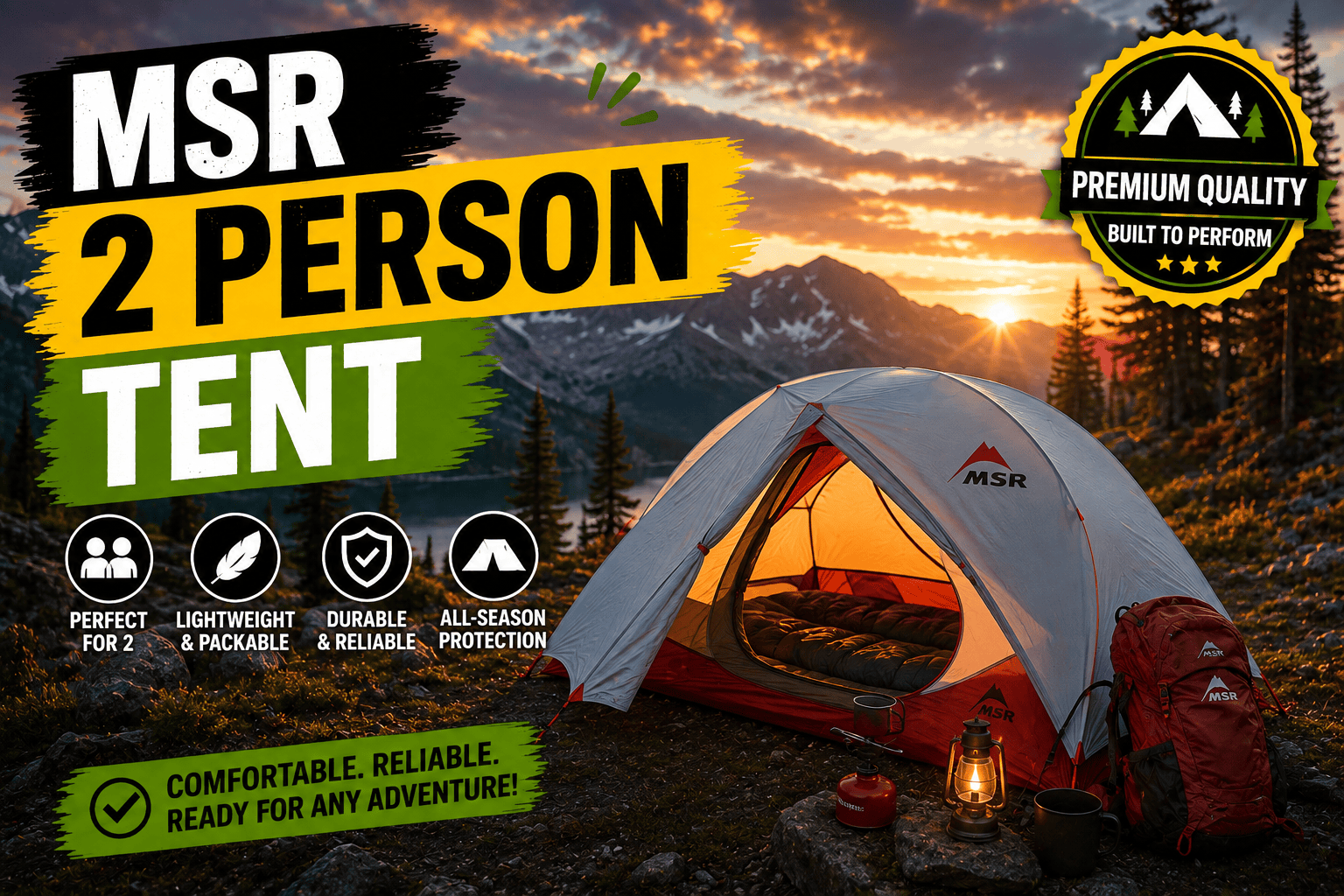
Anyone who has spent a wet night in a leaking shelter knows that a backpacking tent is not a place to cut corners. Among the brands that consistently show up on gear lists compiled by long-distance hikers, mountain guides, and outdoor gear testers, MSR (Mountain Safety Research) has built a reputation that goes back more than five decades. For couples, friends, or solo hikers who want extra room, an MSR 2-person tent tends to be one of the first names that comes up in backpacking forums, gear shop recommendations, and independent lab reviews alike.
This guide looks specifically at the MSR two-person tent lineup as it is sold on Amazon.com today, breaking down the three models that consistently rank as the most purchased and most reviewed. Rather than relying on marketing copy alone, the specifications, weights, and performance notes below were cross-checked against MSR’s own published data, REI’s product listings, and hands-on field reviews from established outdoor publications such as CleverHiker, Switchback Travel, and CampedTooHard. The goal is straightforward: help a reader figure out which specific model actually fits their trips, their budget, and their tolerance for carrying extra weight.
Why MSR Has Earned Its Reputation in Backpacking Circles
MSR, a division of Cascade Designs, has been designing backcountry equipment since 1969, and its tents are engineered and tested at the company’s Seattle facility before ever reaching a trailhead. That in-house testing process, which includes wind-tunnel simulation and controlled water exposure, is part of why gear reviewers treat MSR products as a benchmark rather than just another option on the shelf. It also explains why, year after year, an MSR tent shows up on “best of” lists from outlets that independently test dozens of competing shelters each season.
That track record matters when someone is deciding where to spend several hundred dollars on a tent. A shelter that fails in a storm is not just an inconvenience; it can turn a weekend trip into a genuinely dangerous situation. MSR’s reputation for weatherproofing, pole durability, and consistent quality control is the reason so many gear guides default to recommending the brand for anyone serious about backpacking.
What to Look for Before Buying an MSR 2-Person Tent
Not every two-person MSR tent is built for the same trip. Before comparing specific models, it helps to understand the handful of specs that actually predict how a tent will perform in the field.
Trail weight versus packaged weight. Trail weight (sometimes called minimum weight) includes only the tent body, fly, and poles — the minimum needed to pitch it. Packaged weight adds the stakes, guylines, and stuff sack. Ultralight backpackers usually care most about trail weight, while car campers rarely notice the difference.
Floor area and shape. A tent listed as “2-person” can still feel cramped if the floor tapers sharply at the foot end. Rectangular floor plans, which MSR uses on most of its current 2-person tents, tend to sleep two adults more comfortably than tapered designs of the same square footage.
Vestibule space. Vestibules are the covered areas outside the doors where boots, packs, and cooking gear stay dry. More vestibule area generally means a more livable tent during multi-day trips or bad weather.
Season rating. Most models in MSR’s two-person tent range are built for three-season use (spring, summer, fall). Anyone planning winter trips above treeline should look specifically at MSR’s four-season options instead.
Price and durability trade-off. Ultralight materials save weight but often use thinner denier fabrics that are more prone to abrasion. Heavier tents typically use tougher fabrics and hold up better to repeated use, which matters for buyers who camp often rather than occasionally.
The 3 Best MSR 2-Person Tents on Amazon
Based on sales visibility, review volume, and consistent placement in independent gear-tester roundups, three models stand out as the top two-person options worth considering on Amazon right now.
1. MSR Hubba Hubba LT 2 — Best Overall
The Hubba Hubba LT 2 is MSR’s flagship ultralight backpacking tent and arguably the most recognized MSR 2-person tent on the market. It weighs roughly 3 lbs. 6 oz. packaged, offers 32 square feet of floor space with a true rectangular footprint, and includes two large vestibules totaling 16 square feet for gear storage. The freestanding, hub-and-pole design pitches quickly even for a first-time user, and the solution-dyed micromesh canopy keeps bugs out without trapping excess heat.
Independent testers have specifically praised its weather performance. In one review that tested the tent through violent coastal wind conditions, reviewers noted that the composite pole architecture — borrowed from MSR’s four-season line — held up where lighter competitors would likely have failed, calling it “one of the most competitive balances of weight, protection, and livability” in its class.
Pros: Excellent headroom for its weight class, dependable storm performance, dual doors and dual vestibules, freestanding setup. Cons: Premium price point around $550, reduced mesh paneling compared to older versions means slightly less airflow on warm nights. Best for: Backpackers who want the most balanced, all-around performer and are willing to pay for it.
2. MSR Elixir 2 — Best Value for Durability
The MSR Elixir 2 targets a different buyer: someone who wants MSR-level engineering without the ultralight price tag. At around 6 lbs. 3 oz. packaged, it is noticeably heavier than the Hubba Hubba LT 2, but that extra weight buys tougher 68-denier polyester and 70-denier nylon fabrics, a roomy 30-square-foot floor, and a generous 15-square-foot vestibule per side.
One reviewer who tested the tent over multiple seasons scored it 4.5 out of 5 and described it as “a workhorse… one of the most livable and durable” tents in its price range, specifically highlighting near-vertical walls that make the interior feel larger than the floor dimensions suggest. Setup uses color-coded poles and clips, which most reviewers found intuitive even for campers new to freestanding tents.
Pros: Strong value for the durability offered, spacious vertical-wall interior, includes footprint in the box, straightforward setup. Cons: Heaviest of the three options here, bulkier packed size, included stakes can bend in rocky or frozen ground. Best for: Frequent campers or budget-conscious buyers who prioritize durability and interior space over shaving ounces.
3. MSR FreeLite 2 — Best Ultralight Pick
For buyers whose main priority is minimizing pack weight, the MSR FreeLite 2 is the lightest of the three, with a minimum trail weight around 2 lbs. and a packaged weight of about 2 lbs. 5 oz. It uses a semi-freestanding design with 15-denier ripstop nylon walls, a waterproof bathtub floor, and a hub-and-pole system that MSR says pitches in under two minutes.
Reviewers have generally been enthusiastic, with one outlet rating it 4.2 out of 5 and calling it “a slam dunk” — though notably, that praise was aimed primarily at solo backpackers rather than two-person use. The same review flagged that at 50 inches of width, the tent can feel tight for two adults and their gear, and that the rainfly’s partial coverage near the head end can allow some condensation in cold, damp conditions.
Pros: Lightest option by a wide margin, fast setup, strong weather protection for its weight class, high-quality ripstop fabric. Cons: Interior runs snug for two people, semi-freestanding design needs careful staking, less headroom than the other two models. Best for: Ultralight-focused hikers, thru-hikers, or anyone who mostly camps solo but occasionally needs room for a second person.
MSR 2-Person Tent Comparison at a Glance
| Model | Packaged Weight | Floor Area | Vestibule Area | Season Rating | Approx. Price |
|---|---|---|---|---|---|
| MSR Hubba Hubba LT 2 | 3 lbs. 6 oz. | 32 sq. ft. | 16 sq. ft. (2 doors) | 3-season | ~$550 |
| MSR Elixir 2 | 6 lbs. 3 oz. | 30 sq. ft. | 15 sq. ft. per side | 3-season | ~$340 |
| MSR FreeLite 2 | 2 lbs. 5 oz. | 29 sq. ft. | 15 sq. ft. | 3-season | ~$500 |
Prices and Amazon listings change frequently, so it’s worth checking the current listing before buying rather than relying on figures from any single guide, including this one.
How to Choose Between These Three Tents
Someone who backpacks a handful of times a year and wants one tent to handle almost any three-season trip will likely be happiest with the Hubba Hubba LT 2 — it is the most balanced two-person option in this lineup, even if it costs the most. A buyer who camps frequently, wants extra durability, and does not mind an extra two to three pounds in the pack should lean toward the Elixir 2, which consistently gets praised for surviving repeated use without the fabric or seams degrading. And for anyone training for a long-distance thru-hike or simply obsessed with base weight, the FreeLite 2 is the clear choice, with the understanding that it sleeps two people best when at least one of them is comfortable with close quarters.
It’s also worth thinking about climate. Campers in consistently wet regions should prioritize full-coverage rainflies and taped seams — a feature all three of these tents share — while those camping mostly in dry, mild conditions may get by with lighter mesh paneling and worry less about the condensation trade-offs mentioned in the FreeLite 2 reviews above.
Caring for an MSR 2-Person Tent
Regardless of which model a buyer chooses, a few habits extend the life of any MSR backpacking tent significantly. Drying the tent fully before storing it prevents mildew and fabric breakdown, even after a trip that ended in dry weather, since morning dew alone is often enough moisture to cause problems over a season of storage. Seams should be inspected periodically, and MSR sells seam sealer for owners who want to refresh the waterproof coating after a few years of heavy use. Storing the tent loosely in a large cotton sack, rather than tightly compressed in its stuff sack, also helps the waterproof coatings last longer between trips. Reviewers who have used MSR tents for multiple seasons consistently point to this kind of routine maintenance as the difference between a tent that lasts five years and one that lasts a decade.
Frequently Asked Questions
Is an MSR 2-person tent worth the price compared to cheaper brands? For frequent backpackers, most reviewers say yes — MSR’s pole engineering and fabric quality tend to hold up longer under repeated field use than budget alternatives, which can offset the higher upfront cost over several seasons.
Can one person comfortably use a two-person MSR tent? Yes, and in fact solo hikers often choose a 2-person model specifically for the extra gear storage room, particularly with lighter options like the FreeLite 2.
How long does an MSR 2-person tent typically last? With proper drying, storage, and occasional seam sealing, most reviewers and long-term owners report five to ten years of regular use before fabric or waterproofing needs major attention.
What is the main difference between the Hubba Hubba LT 2 and the Elixir 2? The Hubba Hubba LT 2 prioritizes low weight using higher-end materials at a higher price, while the Elixir 2 uses heavier, tougher fabrics at a lower price point aimed at durability-focused campers.
Final Verdict
All three of these tents represent a legitimate MSR 2-person tent option, and none of them is a bad choice — the right pick simply depends on what matters most for a given trip. Buyers chasing the lightest possible pack weight should look at the FreeLite 2, those who want maximum durability and value should consider the Elixir 2, and anyone who wants the most well-rounded performer, and is willing to pay for it, will likely be satisfied with the Hubba Hubba LT 2. Since Amazon pricing and stock can shift week to week, it’s worth comparing current listings directly before making a final decision.
Disclosure: This article may contain affiliate links. Prices, ratings, and availability reflect information gathered at the time of research and are subject to change; always verify current details on the retailer’s product page before purchasing.